
Statistical Astrology: Secrets of the Zodiac & Navagraha modeling framework
Key Takeaway: The Statistical Genius
The Indian astrological system (Jyotisha) is fundamentally a masterpiece of statistical modeling. Facing an infinite number of unique birth chart possibilities (Permutations), our ancient sages engineered a mathematically robust solution:
Bucketing: They divided the celestial sphere into 12 Rasis and 27 Nakshatras to intentionally reduce the number of variables, thereby maximizing the sample size for every predictive rule.
Variable Selection: They only included the 9 Grahas (Sun through Saturn, plus the two Nodes) because their continuous, varied movement made them dynamic variables. Outer planets (Uranus, Neptune, Pluto) were excluded because their slow pace rendered them statistically insignificant or “stagnant” predictors in the model.
This ancestral wisdom resulted in a framework that is not just ancient, but necessary and sufficient for reliable prediction—a model built for maximum efficiency and minimum complexity.
Revealing the Scientific Framework of Astrology’s Hidden Models
The crucial challenge remains: Our predecessors built an astonishingly complex system—from Bhava (house) to Shadbala (six-fold strength)—with countless unique variables. They aimed to solve a difficult puzzle. However, where is the modern, rigorous statistical framework that confirms the importance of these variables? In statistics, we can quantify which factor explains78% of the result and which explains 3%. In astrology, we rely on tradition. We must acknowledge that for all the elegance of its many factors and rules, the astrological framework currently lacks the data-driven validation that defines the boundaries and optimal application of its rules. This step—of using data to prove and refine the rules—is our fundamental duty today.

Astrology’s Truth: Models, Math, and Media Misconceptions
Move beyond the vague horoscopes and popular media misconceptions. This article offers a researcher’s perspective on astrology, framing it not as pseudoscience, but as a mathematically intensive, multivariate knowledge system. We draw a critical line between the elegant framework of ancient tradition and the common biases, commercial exploitation, and flawed practices of modern astrologers.
How to connect Astrology with Predictive Models, Variables, Data Types and Data Science
Explore the surprising connection between ancient astrology and modern statistical principles. This in-depth article series reveals how astrological rules are built on a foundation of variables, equations, and data relationships, much like modern data science. Part 2 focuses on statistical fundamentals, making complex concepts easy to understand for beginners.
Exploring the Statistical Constructs in Indian Astrology: Introduction
Discover the statistical foundations of Indian astrology in Part 1. Explore Michel Gauquelin’s legacy and the science behind Vedic predictions.
E021 Significance of 27 Nakshatra placement
E021 The Zodiac and 27 Nakshatras: An Astronomical Perspective – Part 5 (Final Part) Nakshatra placement In this final part of the series, we will
E020 Astronomical data on Nakshatras
E020 The Zodiac and 27 Nakshatras: An Astronomical Perspective Part 4 We are going to look at astronomical data of nakshatra taras in this article.
E019 Astronomical Perspective on 27 Nakshatras
E019 The Zodiac and 27 Nakshatras: An Astronomical Perspective – Part 3 – Those 27 Nakshatras The 27 Nakshatras – If you haven’t read first
E018 The Zodiac – Rasi Length
Length of Rashis / Zodiac E018 The Zodiac and 27 Nakshatras: An Astronomical Perspective – Part 2 Constellations – In the first part of this
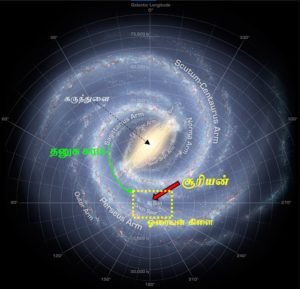
E017 Universe, The Zodiac and 27 Nakshatras
E017 The Zodiac and 27 Nakshatras: An Astronomical Perspective – Part 1 – Universe Our ancient astrologers possessed sound astronomical knowledge about universe. They were
E016 Parallax Correction of Moon and its implications on Dasa Bhukthi Calculations
Moons position in Udu dasa consideration Parallax Correction – One of the basic principles of Vimsottari dasa system in vedic astrology is division of time
E012 Exaltation and debilitation of planets – Testing astronomically – Part 2 of 2
Verse 423 from Thirukkural ” From whomsoever heard, knowing the truth by discerning is wisdom “. Debilitation and exaltation in astrology – This article is
E011. Exaltation and debilitation of planets – Testing astronomically – Part 1 of 2
Exaltation and debilitation of planets – This article is an attempt to look at some of the astrological constructs from an astronomical perspective, in the
E010 Importance of research mindset for an Astrologer
One of the basic tenets of Vedic astrology is the exaltation and debilitation of planets. For example, planet Jupiter is stated to exalt at 5
E009 Construct of Astrological Rules – Part 4 of 4
E009 Construct of Astrological Rules – Part 4 of 4 This article on astrological rules is the final part of 4 Parts series. Regardless of
E008 Which Astrological System is the best?
“Known is little. Unknown is an Ocean!“ Avvaiyar, Lady Tamil Poet of Sangam Times One of the common questions among astrologer community is “Which astrological
E007 Construct of Astrological Rules – Part 3 of 4
This article is the 3rd part of a 4 Parts series on construct of astrological rules. Please read the Part 1 and 2, before getting
E006 Construct of Astrological Rules – Part 2 of 4
Construct of rules – This article is the 2nd part of a 4 Part series. Please read the earlier article to get a better understanding
E005 Construct of Astrological Rules – Part 1 of 4
This article is the first part of a multi-part series on Astrological Rules. The reader is requested to approach my articles in sequence for a
E004 Reliability of basic astrological data and data quality considerations
Reliability – This article emphasizes the need to validate any data before using it, and more specifically elaborates this prerequisite by elaborating the data quality
E003 A brief history of Astrology and need for longitudinal astrological data base
E003 A brief history of Astrology and the need to build a strong longitudinal astrological database In simple terms, Astrology can be defined as Applied
E002 Quick Introduction to Astrology
This article provides a quick introduction to Indian astrology.
E001 My vision of Artificial Intelligence and Machine Learning in Astrology
My vision: If one approaches Astrology from a mathematical perspective, it lends itself as a candidate for implementing Artificial Intelligence, Machine Learning and Deep Learning.